Hearing loss is not a single condition with a single solution. The right treatment depends on the type, degree, and duration of hearing loss — and on how it is affecting your communication, cognitive health, and quality of life. Here is a clinical overview of the most effective solutions available today.
Step One: Accurate Diagnosis
No treatment decision should be made without a comprehensive hearing evaluation. Cleveland Clinic recommends that anyone seeking tinnitus management first obtain a full audiological evaluation — because understanding hearing loss is foundational to determining the right care path. At AUDICOG, our evaluation extends further to include cognitive hearing performance, because the brain’s role in processing sound is as important as the ear’s.
Hearing Aids
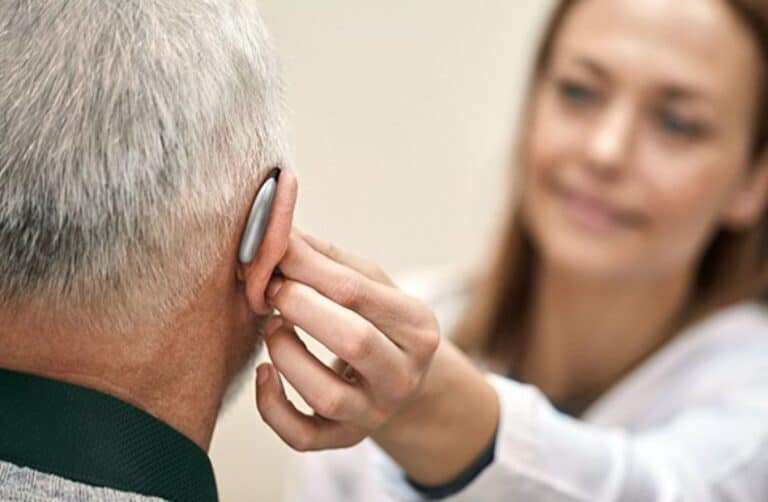
Hearing aids remain the most widely prescribed and evidence-supported solution for sensorineural hearing loss. Modern devices use AI-powered noise reduction, Bluetooth connectivity, and real-time environmental adaptation. They are available in multiple styles — from invisible-in-canal to behind-the-ear — and rechargeable options have eliminated battery inconvenience.
Critically, Johns Hopkins researchers have found that hearing aid users in population studies show lower dementia prevalence than non-users, and that the largest randomized clinical trial of its kind — the ACHIEVE study — demonstrated that hearing intervention slowed cognitive decline by 48% in higher-risk adults over three years. Treating hearing loss with professionally fitted hearing aids is no longer just a hearing decision — it is a brain health decision.
Cochlear Implants
For individuals with severe to profound sensorineural hearing loss who do not benefit sufficiently from hearing aids, cochlear implants are a highly effective option. A cochlear implant bypasses damaged inner ear hair cells and directly stimulates the auditory nerve, restoring meaningful sound perception. Candidacy, surgical placement, and rehabilitation are managed by a multidisciplinary team.
Medical and Surgical Treatments
Conductive hearing loss — caused by fluid, infection, eardrum perforation, or structural abnormalities — often responds to medical or surgical intervention. Conditions such as otosclerosis, chronic otitis media, or perforations may be correctable, potentially restoring hearing without devices.
Auditory and Cognitive Rehabilitation
Hearing devices alone do not fully restore communication ability — particularly in challenging listening environments. Auditory rehabilitation helps the brain adapt to amplified sound and teaches strategies for difficult listening situations. At AUDICOG, cognitive rehabilitation goes further, addressing the working memory and processing demands that hearing loss places on the brain.
Tinnitus Management
Tinnitus — ringing, buzzing, or humming in the ears — frequently accompanies hearing loss and requires its own targeted management. Cleveland Clinic’s Tinnitus Management Clinic uses an interprofessional team model combining audiology, neurology, dentistry, psychology, and physical therapy. Effective approaches include sound therapy, cognitive behavioral therapy (CBT), hearing aids with tinnitus programs, and structured counseling. AUDICOG’s dedicated tinnitus care program addresses both the auditory and cognitive dimensions of the condition.
Lifestyle and Protective Measures
Cleveland Clinic notes that noise-induced hearing loss is 100% preventable. Consistent use of hearing protection in loud environments, cardiovascular health management — blood flow to the cochlea is critical — and avoidance of ototoxic medications where clinically appropriate are all important protective strategies.
Frequently Asked Questions
What is the most effective treatment for age-related hearing loss?
Professionally fitted hearing aids, combined with auditory and cognitive rehabilitation and regular audiological follow-up, represent the most evidence-based approach.
Can hearing loss be cured?
Sensorineural hearing loss is not currently reversible. However, it is highly treatable, and early treatment prevents the cognitive consequences of prolonged auditory deprivation.
How do I know which solution is right for me?
The answer begins with a comprehensive evaluation. At AUDICOG, we assess your hearing profile, cognitive function, and communication goals before making any recommendation.